
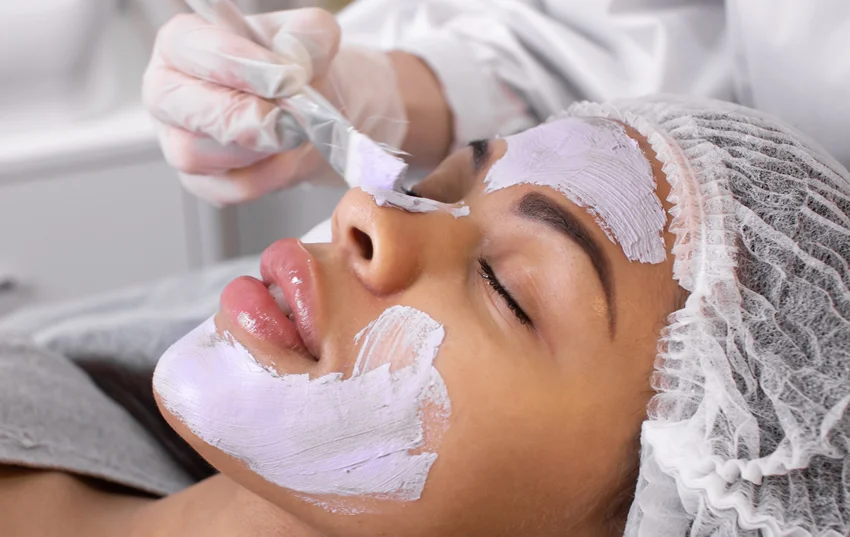
Chemical peel is a dermatological treatment designed to improve the appearance of the skin by applying a chemical solution that causes the outer layers of skin to exfoliate and eventually peel off. This process promotes the regeneration of new skin, leading to a smoother, more youthful appearance.
Chemical peels are generally categorized into three main types based on their depth of penetration:
Ingredients: Often contain mild acids like alpha-hydroxy acids (AHAs) or beta- hydroxy acids (BHAs), such as glycolic acid or salicylic acid.
Benefits: Effective for treating fine lines, mild acne, and uneven skin tone. They provide a gentle exfoliation and are suitable for most skin types.
Recovery: Minimal downtime; skin may feel slightly red and dry for a few days.
Ingredients: Typically use trichloroacetic acid (TCA) or a combination of TCA and glycolic acid.
Benefits: More effective for treating moderate sun damage, wrinkles, and acne scars. They penetrate deeper than superficial peels.
Recovery: Moderate downtime; skin may peel for about a week, and redness can persist for several weeks.
Ingredients: Generally use phenol or high concentrations of TCA.
Benefits: Suitable for more severe skin issues such as deep wrinkles, significant sun damage, and precancerous growths.
Recovery: Longer recovery time; redness and peeling can last for several weeks, and the skin may take months to fully heal.
While chemical peels are generally safe when performed by qualified professionals, potential side effects can include:
Chemical peels are a versatile cosmetic treatment that can significantly improve the appearance of the skin. By understanding the types, benefits, and potential risks, individuals can make informed decisions about whether this treatment aligns with their skincare goals. Consulting a qualified dermatologist is essential to determine the most appropriate type of peel for specific skin concerns.